Role
Product Designer & Full-Stack Game Engineer
Party Game · 2026
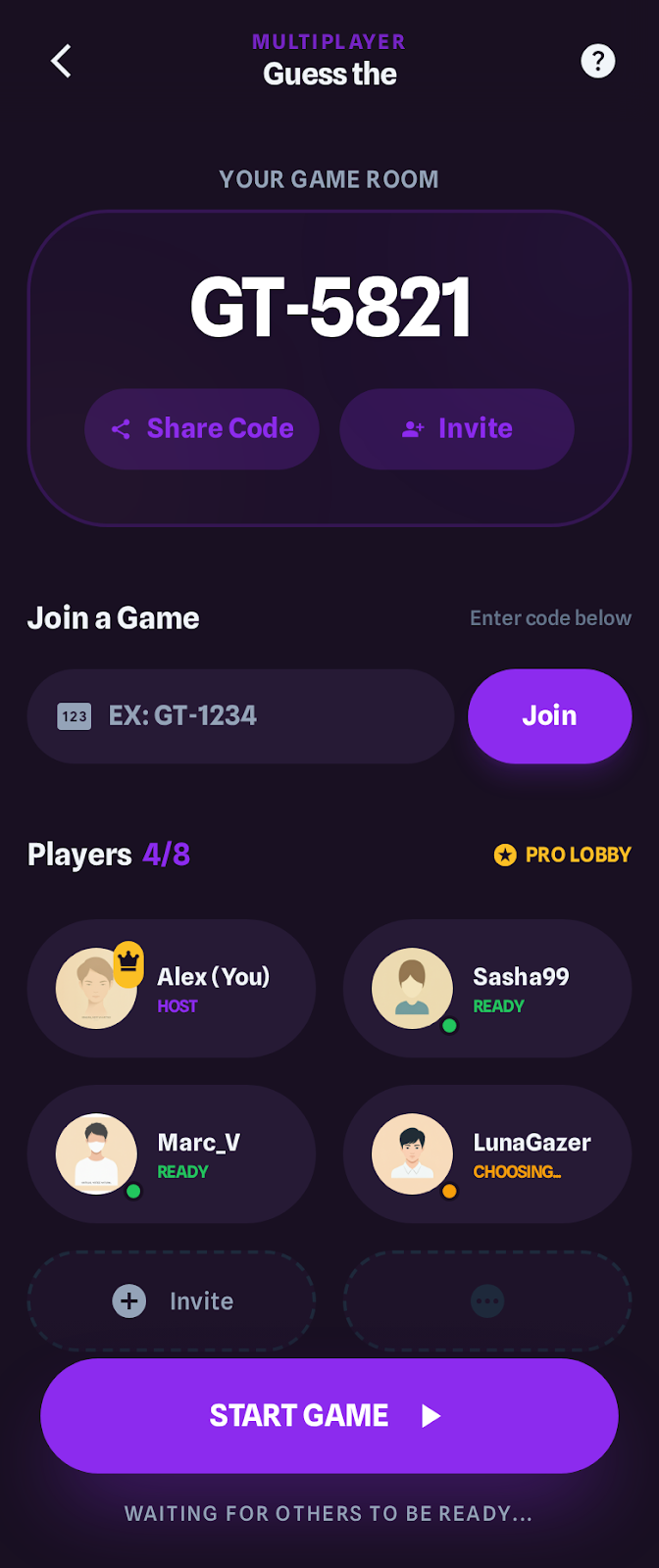
Cups and Giggles is a mobile-first social guessing game built around party rooms, themed trivia decks, and live multiplayer rounds. I shaped both the player experience and the backend plan for realtime lobbies, scoring, and content delivery.
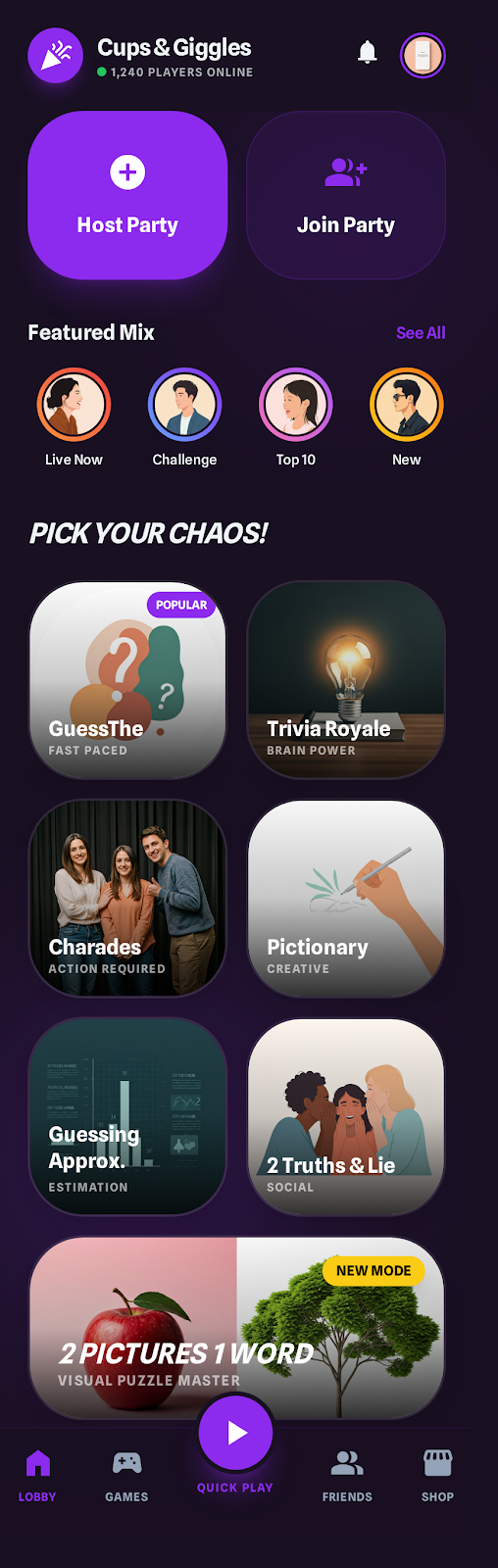
Cups and Giggles is designed as a party-first guessing game. Players can host or join a room in seconds, choose a theme, and move through short competitive rounds that work equally well for solo play, remote friends, or in-person groups sharing the same session.
A custom content pipeline turns source data into playable decks, so new categories can be imported, processed, and served without hand-authoring every question and image asset.
Mobile client
Flutter frontend with animated navigation, cached images, and hooks for sign-in, ads, and purchases.
Core services
Fastify handles auth, content, and profile APIs while Go manages low-latency room events and gameplay state.
Data layer
PostgreSQL stores users, scores, and question data, while Redis holds room state and live leaderboard updates.